PURSUE Row 148
PURSUE Release 01 row 148 identifies NASA-UAP-VM3 as a NASA image record released on May 8, 2026, tied to a 1969 Moon incident entry and filed as an image rather than a video or PDF.1 Its metadata describes an archival Apollo 12 lunar-surface photograph with a highlighted area of interest near the right edge of the frame, above the horizon, where the release says unidentified phenomena are visible.2
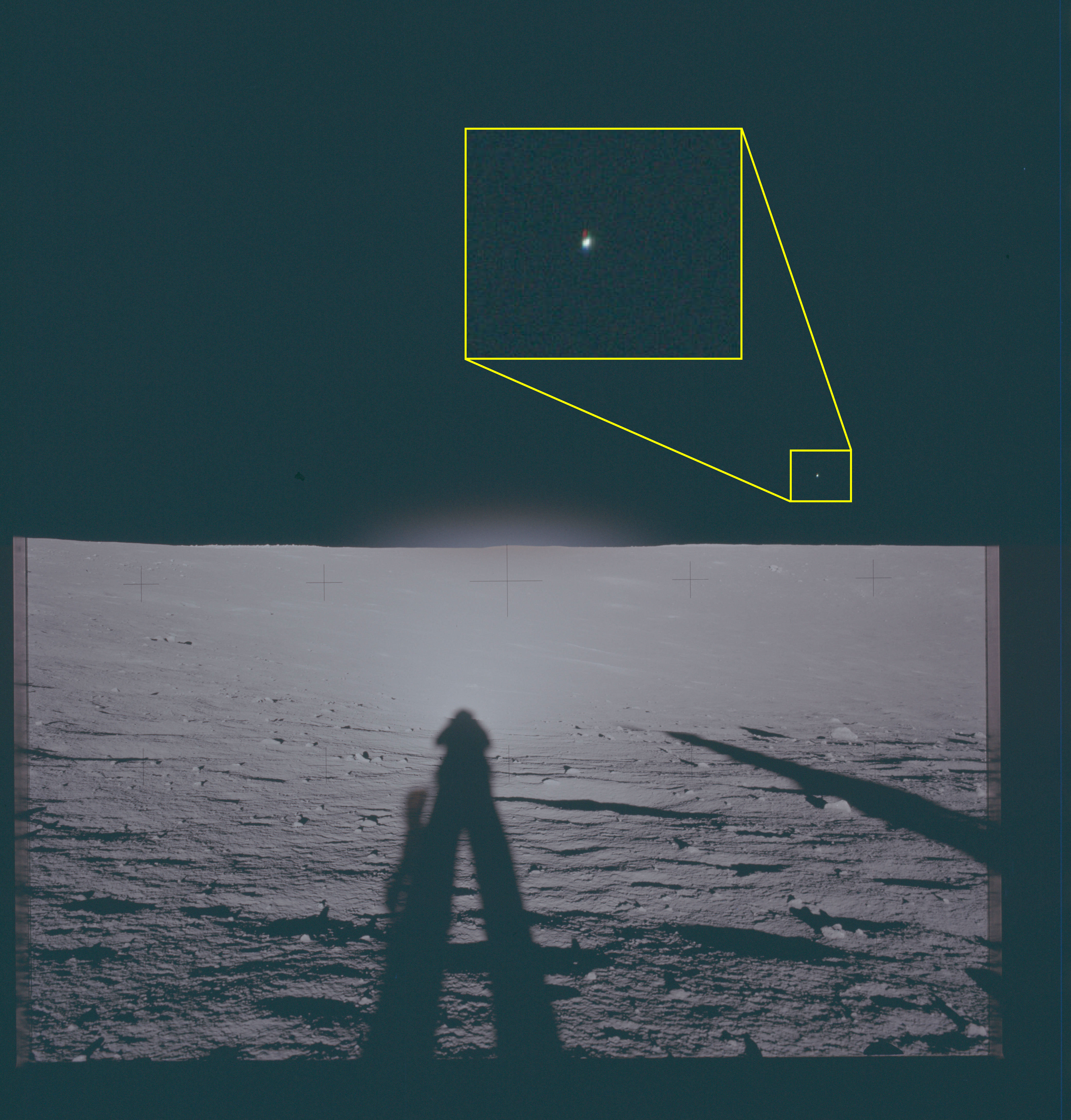
Apollo 12 Moonwalk
Apollo 12 was NASA's second crewed lunar landing mission. NASA lists Charles Conrad Jr., Alan L. Bean, and Richard F. Gordon Jr. as the crew, with launch on November 14, 1969 and splashdown on November 24, 1969.3 Conrad and Bean descended in the Lunar Module Intrepid to the Ocean of Storms while Gordon remained in lunar orbit in the Command and Service Module Yankee Clipper.4
The PURSUE record does not provide the original Apollo frame number, film magazine, exposure note, or scan provenance. NASA's Apollo 12 image library and Lunar Surface Journal are the natural source context for mission photography, but this release filename alone cannot be matched to a specific original NASA frame without additional documentation.5
Right-Edge Markup
The released image presents a lunar surface and horizon scene with a visual annotation on the right side above the horizon. The annotation tells the viewer where the release's area of interest is located; it does not, by itself, establish distance, size, motion, altitude, material, or whether the marked feature is a physical object, imaging artifact, dust, glare, scan damage, or another ordinary source.
That distinction is the reason the record matters. It places an Apollo-era NASA photograph inside a current UAP release and preserves the official remote image for independent review, while also showing the limits of a standalone annotated image: the metadata can identify the file, mission association, agency, date range, and release context, but not a definitive explanation for the marked feature.